
The Residential Plumbing Service Calls We Standardized First

*Affiliate Disclosure: Some links on this page are affiliate links, which means I may earn a commission if you purchase through them, at no additional cost to you. I only recommend tools I personally use or have thoroughly vetted and confidently stand behind to help service business owners build structured, profitable companies.

When we decided to focus heavily on residential plumbing service work at Pete’s Plumbing, I started to notice something very important.
Most residential plumbing problems were not completely random. They repeated themselves every single week. We were getting calls for kitchen faucet replacements, bathroom fixture repairs, water heater issues, sump pump problems, toilet repairs, small leaks, and emergency service calls.
At first, we handled many of these calls the way a lot of smaller plumbing companies do. We relied too much on memory, handwritten notes, and whatever information the customer happened to give us during the phone call. Some days the process worked fine, but other days it created confusion, delays, and missed opportunities.
As the business grew, I realized the problem was not the plumbing work itself. The real problem was that we were treating repeatable residential plumbing service calls like brand-new situations every time. That created stress in the office, uncertainty for the plumber, and inconsistency for the customer.
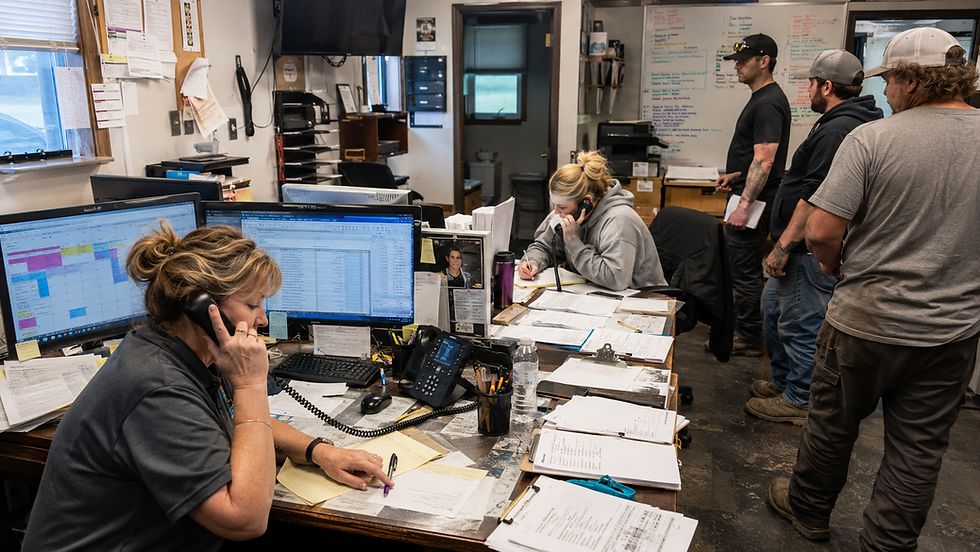
We Started Building Procedures Around Common Plumbing Calls
One of the biggest operational decisions we made in Pete’s Plumbing was to start organizing our residential plumbing service work into categories. Instead of looking at every call as completely different, we started asking a better question.
What types of plumbing jobs do we handle over and over again?
The answer became clear very quickly. Bathroom fixtures, kitchen fixtures, water heaters, sump pumps, toilets, and common service repairs were showing up in our schedule all the time. These became some of the first residential plumbing service calls we standardized.
That one decision helped us create better systems for pricing, scheduling, truck preparation, customer communication, and technician readiness. A plumbing company becomes much easier to manage when the office is not starting from scratch every time the phone rings.
Kitchen Faucet Replacements Were One of the First Calls We Standardized
One of the first plumbing service calls we standardized was kitchen faucet replacements. We were doing them regularly, and we realized there was no reason to treat each one like a completely new process.
So we made a practical decision. We kept three faucet options on our trucks at different price points.
That helped in several ways. The plumber was prepared before arriving at the home. The customer had clear options. The job could often move faster. The office had a more consistent way to explain the service, and the pricing became easier to manage.
This was not just about convenience. It protected time, it protected profit, and it helped the plumber avoid unnecessary supply house trips during the day. That matters because every unnecessary delay affects billable hours inside a plumbing business.
Water Heaters Needed a Different System
Water heaters were different. They are more expensive, harder to stock, and require more careful pricing and scheduling.
But that did not mean we could leave the process unstructured. We still needed a clear procedure. The office needed to gather the right information, the pricing needed to be easy to access, the plumber needed clear job details, the customer needed to understand the process, and the schedule needed to be managed carefully.
Water heater calls can become stressful very quickly because homeowners usually need help fast. When there is no procedure, the office scrambles. When there is a procedure, the team knows what information to collect, how to prepare, and what steps come next.
That is the difference between reacting all day and running the business with control.
Sump Pumps Were Another Call That Needed Structure
Sump pump calls were another area where standardization mattered. When heavy rain hits, sump pump calls can come in quickly. A homeowner may be worried about water damage, basement flooding, or a pump that already failed.
If the office does not gather the right information, the plumber may arrive without understanding the urgency or the conditions at the home. That is why we needed a repeatable process.
We needed to know if the pump was running, if there was water in the basement, if there was a backup system, if this had happened before, and if the home was in an area where flooding was common.
Those details helped our plumbing company respond better. They also helped the plumber walk into the home more prepared. The more information the office gathers upfront, the smoother the service call usually becomes.
Standardized Calls Helped Our Plumbers Work More Productively
One of the biggest benefits of standardizing residential plumbing service calls was that our plumbers became more prepared. They were not walking into every home blind.
They had better information. They understood the type of job. They had a better idea of what materials or options might be needed. They could serve the customer more confidently because the office had already followed a process.
This is where many plumbing businesses lose money without realizing it. The job may seem small. The delay may seem minor. The extra trip may seem normal.
But over time, those small inefficiencies reduce profitability. A plumbing business does not only lose money on big mistakes. It also loses money when the daily process is inconsistent.
The Phone Call Became the Starting Point for Each Service Procedure
The phone call still mattered, but not just because of how the customer was greeted. The phone call became the starting point for each standardized plumbing service procedure.
When a customer called about a kitchen faucet, the office needed to know what questions to ask. When a customer called about a water heater, the office needed to know what information mattered. When a customer called about a sump pump, the office needed to understand the urgency.
That is why we created plumbing call intake procedures and phone scripts for our office staff. The goal was not to make the conversation robotic. The goal was to make sure the right information was collected every time.
Because if the office does not gather enough information, the plumber arrives less prepared. If the plumber arrives less prepared, the job slows down. If the job slows down, profitability drops.
That is why customer intake is not just an office task. It is part of the plumbing system.
Jobber Helped Us Keep the Residential Plumbing Workflow Organized

As Pete’s Plumbing grew, we needed a better way to keep our residential plumbing service process organized. This is where Jobber became extremely valuable in our plumbing company.
Jobber helped us organize customer information, scheduling, dispatching, quotes, job history, and communication in one place. That visibility mattered.
Instead of relying on memory, paper notes, or scattered messages, our office and plumbers could see important job details more clearly. For residential service work, that structure made a big difference.
It helped us manage repeatable plumbing jobs more consistently. It helped the office stay organized. It helped technicians understand what they were walking into. It helped the business feel more controlled as we grew.
Software alone does not create procedures. But when you already know the procedures you want your team to follow, the right software can help support them every day.
What Changed Once We Standardized Residential Plumbing Service
Once we built procedures around our residential plumbing service calls, the business started operating more smoothly. Quotes became more consistent. Technicians became more prepared. Customers received clearer communication, and the office felt less chaotic.
Our team no longer had to figure everything out from scratch every time the phone rang.
That reduced decision fatigue inside the business.
And that matters because plumbing companies do not usually become overwhelmed because of one major problem. They become overwhelmed because too many small decisions are being made differently every day.
Standardizing common residential plumbing service calls gave our team a better way to work. It gave the office a better way to collect information. It gave plumbers a better way to prepare. And it gave the customer a better service experience.
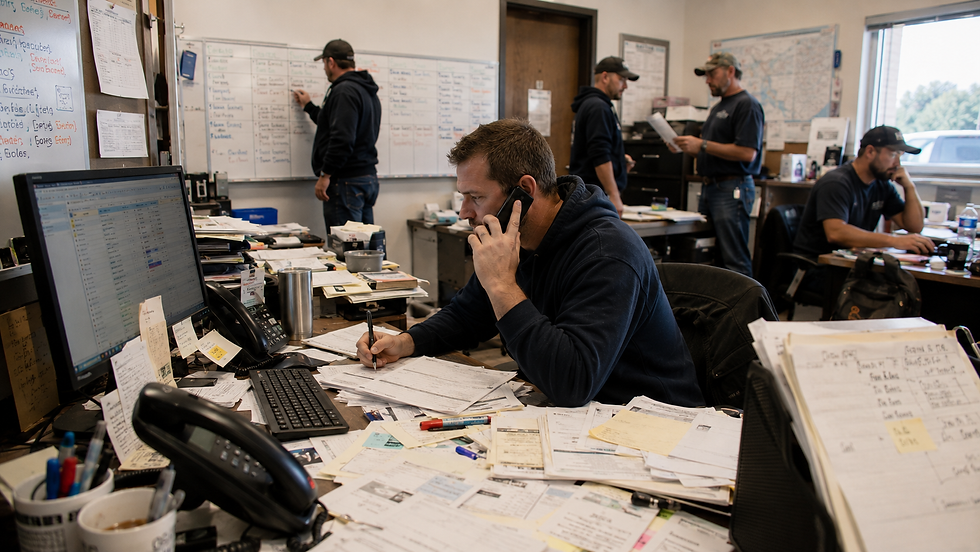
The Plumbing Companies That Grow With Less Chaos Build Systems Around Repeatable Problems
After running a plumbing company for over 35 years, I believe this strongly: organized plumbing companies do not wait for every problem to become urgent before creating a process.
They look at the jobs they do every week and build systems around them. That is how a residential plumbing business becomes easier to manage. That is how plumbers become more productive. That is how the office becomes more confident.
And that is how the owner starts gaining more control over the day-to-day operation.
If your plumbing company is handling the same types of calls every week, those calls should not be managed by memory. They should be supported by procedures.
Ready to Build a More Organized Residential Plumbing Business?
If you are trying to run a residential plumbing business without clear procedures, structured pricing, organized scheduling, and consistent customer intake, the business eventually becomes much harder to manage as you grow.
That was one of the biggest lessons we learned in Pete’s Plumbing. Jobber helped us create more structure around our residential plumbing workflow, customer communication, plumbing dispatching, quotes, scheduling, and job tracking so the entire team could stay more organized and prepared throughout the day.
If you are ready to build a plumbing company that feels more organized, professional, and profitable, Jobber can help you create the structure needed to support that growth.
*Affiliate Disclosure: Some links on this page are affiliate links, which means I may earn a commission if you purchase through them, at no additional cost to you. I only recommend tools I personally use or have thoroughly vetted and confidently stand behind to help service business owners build structured, profitable companies.

Sandra Wallmann
35+ Year Service Business Owner | Founder of Sandra’s Business Guide
Sandra Wallmann has spent over 35 years running Pete’s Plumbing & Heating, building systems that support consistent revenue, strong client retention, and long-term growth. She is also the owner of Hit the Spot Treats, a corporate gifting business focused on client appreciation and retention.
Through Sandra’s Business Guide, she shares real-world strategies to help service business owners move from daily operations into true ownership.


Comments